
You went to the event.
You talked to people.
You collected the business cards.
Maybe you even scheduled a couple of one-on-ones.
And yet…
Where are the referrals?
If networking feels like a whole lot of activity without a whole lot of business to show for it, the problem may not be networking itself.
It might be the room.
It might be your approach.
And yes, sometimes it might be you.
That’s actually good news, because all three can be fixed.
Quick Answer: What Are the Biggest Networking Mistakes?
The seven biggest networking mistakes are:
- Treating every networking room the same
- Collecting contacts instead of building relationships
- Being too vague about what you do
- Networking without a follow-up and tracking system
- Expecting referrals before creating value for others
- Giving up before relationships have time to develop
- Measuring networking activity instead of networking ROI
Fix those seven things and networking becomes a lot less random.
And that’s the whole point.
Referrals shouldn’t depend on whether you happened to shake the right hand on Tuesday.
Let’s break these down.
Networking Mistake #1: Treating Every Room the Same
A Chamber event.
A 300-person business mixer.
An industry association meeting.
A structured referral group.
A casual networking coffee.
Those are not the same room.
So why would you walk into all of them with the same goal?
Yet people do it constantly.
They walk into every networking event thinking:
I need to meet people.
Okay.
Why?
What kind of people?
And what are you hoping happens after you meet them?
Because “meet people” isn’t a networking strategy.
It’s an activity.
The Fix: Know What the Room Is Built to Do
Before you walk into a networking event, ask:
- Am I trying to increase visibility?
- Am I looking for referral partners?
- Am I trying to build a consistent referral pipeline?
- Am I looking for strategic partners?
- Am I here to learn?
- Am I trying to become more connected in this particular community?
Different rooms serve different purposes.
A Chamber of Commerce can be fantastic for community involvement, visibility, advocacy, and meeting a broad cross-section of the business community.
A large mixer can introduce you to people you probably wouldn’t meet otherwise.
A structured referral networking group is generally designed to create deeper relationships and recurring referral opportunities.
None of those is inherently better.
They’re just different.
That’s why I’m such a believer in finding the right room, not simply joining more groups.
If you’re trying to decide between the two, read our Referral Networking vs. Chamber of Commerce guide.
And before you decide networking doesn’t work, ask two questions:
Was I in a room designed to produce the result I wanted?
And…
Did I actually do what was required to get that result?
Sometimes it’s not you.
It’s the room.
Sometimes?
It’s a little bit of both.
Networking Mistake #2: Collecting Contacts Instead of Building Relationships
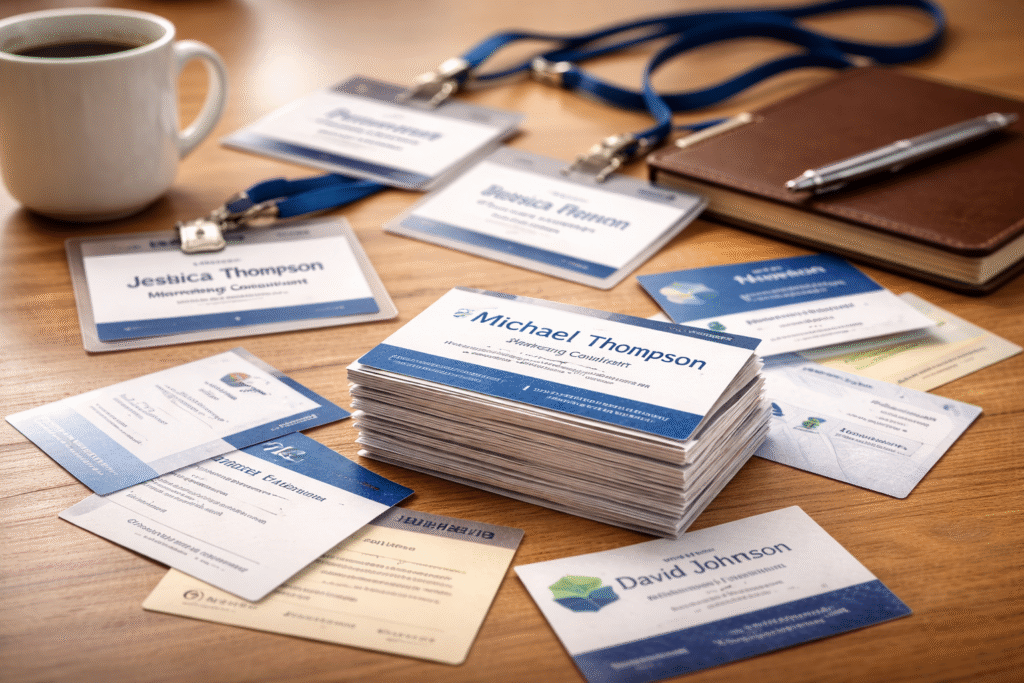
Forty business cards in your pocket can feel productive.
It isn’t.
A business card with no follow-up is recycling with extra steps.
The same goes for 40 new LinkedIn connections you never speak to again.
You can meet someone at a networking event in Little Rock, Bentonville, Conway, Fayetteville, Rogers, or anywhere else in Arkansas and have a fantastic ten-minute conversation.
But if neither of you ever does anything after that conversation?
That’s all it was.
A conversation.
Networking was never about how many people you could meet.
It’s about building the right relationships with the right people.
The Fix: Follow Up While They Still Remember You
Don’t send:
“Great meeting you. Let’s stay connected!”
Technically that’s follow-up.
It’s just not particularly useful follow-up.
Instead, reference something you actually talked about:
“It was great meeting you yesterday. I really enjoyed our conversation about the challenges contractors are having finding dependable employees. I’d love to continue that conversation.”
Now I know you actually remember me.
And please don’t immediately turn the follow-up into a sales pitch.
You just met them.
This is networking, not speed dating with invoices.
Go deeper with fewer people.
Learn:
- Who they serve
- What problems they solve
- What a great referral actually looks like
- Who they would like to meet
- How you might be useful to them
Relationships beat contact lists.
Every time.
If follow-up is where your networking tends to fall apart, read The 24-Hour Follow-Up Rule Most Arkansas Business Owners Ignore.
Networking Mistake #3: Being the Best-Kept Secret in the Room
“I’m in insurance.”
“I do marketing.”
“I’m a Realtor.”
“I’m an attorney.”
Great.
So are a lot of other people.
The problem isn’t necessarily that people don’t like you.
The problem is that they have absolutely no idea when to think of you.
And if people don’t know when to think of you, they can’t refer you.
The Fix: Become Referable
Instead of trying to explain everything you do, give people something they can remember.
For example:
“I help Arkansas contractors protect their crews and keep safety issues from costing them jobs.”
That’s different from:
“I sell insurance.”
Or:
“I help small businesses in Conway get their books organized so they can make better financial decisions.”
That’s a lot easier to remember than:
“I’m a bookkeeper.”
A simple framework is:
I help [specific person or business] get [specific result] by [what you do].
You don’t need to recite that formula word for word.
Actually, please don’t.
We have enough robotic elevator pitches in the world.
The point is to become specific enough that someone recognizes an opportunity for you when it shows up.
You are not trying to make everyone in the room understand everything you do.
You’re trying to help the right people remember when to call you.

Networking Mistake #4: Networking Without a System
Here’s one of my favorite questions to ask business owners:
What did your networking produce last year?
And a surprising number of people can’t answer it.
They’ll say:
“I think I got some business.”
Or:
“It’s been pretty good.”
Or my personal favorite:
“I’ve made a lot of great connections.”
Great.
Did any of them pay you?
Because “I think this group is helping” isn’t data.
It’s a vibe.
And a vibe is not a growth strategy.
The Fix: Track Your Networking Results
At minimum, track:
- Who sent the referral
- Who received it
- Where the relationship originated
- Whether the referral turned into a conversation
- Whether it became a proposal
- Whether it became a client
- What the closed business was worth
- How quickly you followed up
You can use a spreadsheet.
You can use your CRM.
You can use referral-tracking software.
I care much less about what you use than whether you actually use it.
At Network Arkansas, referral and ROI tracking are intentionally built into our model because I don’t think you should have to guess whether your networking investment is working.
We even have a Networking ROI guide that walks through what you should measure, including the cost of your time.
Because your networking isn’t free just because the event was.
Your time has value.
Your travel has value.
Your membership dues have value.
And the three hours you spent at an event where you talked exclusively to people you already knew?
Yep.
Those have value too.
Measure it.
Networking Mistake #5: Expecting Referrals Before You’ve Given Anyone a Reason to Refer You
Networking is not a vending machine.
You cannot insert one handshake and expect a client to fall out.
And yet…
Someone joins a networking organization, attends two meetings and starts wondering:
“Okay, but what am I getting out of this?”
I understand the question.
You absolutely should care about ROI.
But relationships don’t work transaction by transaction.
The Fix: Create Value First
Make the introduction.
Share the resource.
Recommend someone’s business when they’re genuinely a good fit.
Send the article that made you think of them.
Answer the question.
Connect two people who should know each other.
Help without immediately calculating what you’re owed in return.
That doesn’t mean referrals don’t matter.
Of course they matter.
But healthy referral relationships are built on trust, and trust develops when people see that you’re someone who contributes.
Research on small and midsize businesses has found a relationship between leaders’ social capital and their ability to generate business referrals. In other words, the relationships surrounding a business leader can have very real business value.
But here’s the part people sometimes miss:
You don’t always know where the return is going to come from.
You might introduce Person A to Person B today.
Six months from now, Person C may hire you because Person A told them you’re the person they should call.
That’s networking.
You don’t control when your network gives back.
You control what you put into it.
Networking Mistake #6: Showing Up Once and Deciding Networking Doesn’t Work
You visited a networking group.
Nobody handed you a referral.
Clearly networking is a scam.
Come on.
You wouldn’t expect someone to trust you with their best client after knowing you for 47 minutes.
So why do we evaluate networking that way?
Relationships need repetition.
People need time to understand:
- What you actually do
- How good you are at it
- How you treat clients
- Whether you follow through
- What kind of referral you want
- Whether they’re comfortable attaching their reputation to yours
That last one matters.
When someone refers you, they’re not just giving you a lead.
They’re lending you some of their credibility.
The Fix: Give the Right Room Enough Time to Work
Consistency doesn’t mean attending every networking event you can find.
I’d actually argue the opposite.
Choose intentionally.
Then show up.
Participate.
Follow up.
Contribute.
Build relationships outside the meeting.
And pay attention to what’s happening over time.
One room where you’ve developed 15 meaningful relationships can be far more valuable than six rooms where 300 people vaguely recognize your face.
That doesn’t mean you should stay forever in a networking organization that isn’t producing value.
Remember Mistake #4?
Track it.
If the relationships aren’t growing, opportunities aren’t developing, the room isn’t aligned with your goals, or the time investment isn’t making sense, that’s useful information.
Maybe you need to change your approach.
Maybe you need to change rooms.
But don’t confuse “this didn’t produce an immediate referral” with “networking doesn’t work.”
Those aren’t the same thing.
Networking Mistake #7: Confusing Activity With ROI
You attended three networking events this week.
Cool.
What happened because of them?
You collected 25 business cards.
Cool.
What happened because of them?
You had six one-on-ones.
Again…
What happened because of them?
Networking activity is incredibly easy to measure.
Networking effectiveness takes a little more work.
The Fix: Measure What Actually Matters
Ask yourself:
- Which networking relationships have generated qualified opportunities?
- Who regularly introduces me to the right people?
- Which rooms are producing meaningful relationships?
- Which activities are taking time without producing much value?
- Am I contributing enough to the relationships I’m expecting something from?
- What business can I trace back to my network?
- What is my actual networking ROI?
If the answer is “I don’t know,” start there.
If the answer is “nothing,” don’t immediately blame networking.
Look at the room.
Then look in the mirror.
Maybe the room isn’t right.
Maybe your approach isn’t right.
Maybe you haven’t been there long enough.
Maybe you’ve been “networking” for two years without actually building relationships.
That’s not failure.
That’s data.
Use it.
Why These Networking Mistakes Matter Even More in Arkansas
Arkansas is still an incredibly relationship-driven business environment.
People know people.
Reputations travel.
And connections overlap.
Someone you meet at a Little Rock business event may know the person you need in Conway.
Someone in Bentonville may introduce you to a business owner in Fayetteville.
The person sitting across from you today may not need what you sell at all.
But they may know ten people who do.
That’s what makes business networking in Arkansas so powerful.
It also makes careless networking expensive.
Because your reputation travels through the network too.
The goal isn’t to become the person everyone has met.
It’s to become the person the right people know, trust, remember and refer.
What Does a Good Business Networking Group Look Like?
There isn’t one networking model that’s right for everyone.
That’s important enough to say again.
There isn’t one networking organization that’s right for everyone.
Some people thrive in Chambers of Commerce.
Some want industry associations.
Some prefer large open networking events.
Some want structured referral groups.
Some need a mastermind-style community.
Some benefit from several of those at the same time.
But strong networking environments usually have a few things in common:
- A clear purpose
- The right people in the room
- Enough consistency for real relationships to develop
- Conversations that go deeper than elevator pitches
- Opportunities to contribute, not just sell
- Accountability and follow-through
- A way to determine whether the investment is actually creating value
That’s what I mean when I talk about finding the right room.
The biggest room isn’t automatically the best room.
The most expensive room isn’t automatically the best room.
And the room everyone else says you “have to join” isn’t automatically the best room either.
The right room is the one that fits your goals, gives you access to relationships that matter, and provides an environment where you can contribute and grow.
If you’re trying to figure out which type of organization makes sense for you, start with our Arkansas Business Networking Guides.
We’ve broken down options in both Central Arkansas and Northwest Arkansas because I’d rather help you find the right room than convince you every room needs to be ours.
How Network Arkansas Approaches Referral Networking
Network Arkansas is built around a pretty simple belief:
Networking should create real relationships and real business value.
Not just attendance.
Not just business cards.
And definitely not another weekly obligation you dread seeing on your calendar.
Our networking communities are professionally facilitated and designed around intentional conversations, accountability, business growth and relationships that continue outside the meeting.
Some Network Arkansas groups are profession-exclusive. Others, including NIAX, use a non-exclusive model.
Different rooms.
Different structures.
Different needs.
Same underlying goal:
Put the right people together and give those relationships enough structure to actually go somewhere.
You can explore Network Arkansas networking groups here or learn more about our profession-exclusive networking groups and NIAX referral networking.
Frequently Asked Questions About Networking and Referrals
What is the biggest networking mistake business owners make?
One of the biggest networking mistakes is treating every networking opportunity the same. Chambers, mixers, industry organizations and structured referral groups serve different purposes. Start by deciding what result you want, then choose a room designed to help create it.
Why am I not getting referrals from networking?
If you’re networking but not getting referrals, look at four things first: whether you’re in the right room, whether people clearly understand what you do, whether you’re consistently building relationships and following up, and whether you’ve given those relationships enough time to develop trust.
How can I get more referrals from networking?
Become easier to refer. Clearly explain who you help and what problem you solve, build deeper relationships with fewer people, follow up consistently, create value for others and track where your referrals and closed business actually originate.
How quickly should I follow up after a networking event?
Follow up while the conversation is still fresh, ideally within a day or two. Make the message personal by referencing something you actually discussed instead of sending a generic “great meeting you” message.
How long does networking take to work?
There isn’t a universal timeline because trust develops differently depending on the people, industry and frequency of interaction. Don’t judge a relationship-based networking strategy by a single event. Look for increasing trust, stronger relationships, introductions and business opportunities over time.
How do I know whether a networking group is worth the money?
Calculate your networking ROI. Track membership costs, event costs and the value of your time against referrals, opportunities and closed business connected to the group. Read our full guide to measuring networking ROI for a more detailed framework.
Is a referral networking group better than a Chamber of Commerce?
Not necessarily. They’re designed to accomplish different things. Chambers often provide broad community connections, visibility and advocacy, while referral groups are generally structured around developing relationships that generate business introductions and referrals. Many business owners benefit from participating in both.
The Bottom Line: Better Networking Starts With the Right Room
You don’t need to attend every networking event in Arkansas.
You don’t need 500 business cards.
You don’t need to know everyone.
You need the right people to know you well enough to understand what you do, trust you enough to put their reputation behind your name, and remember you when the right opportunity shows up.
That takes intention.
It takes follow-up.
It takes consistency.
And yes, it takes the right room.
If networking hasn’t been working for you, don’t just add another event to your calendar.
Figure out what’s actually broken.
Then fix that.
Want to explore the different networking options available in Arkansas? Start with our Business Networking Guides.
Want to see what Network Arkansas feels like in person? Visit a Network Arkansas meeting and we’ll help you find a room that fits your business.
Or, if you’re not ready for a group and just want to meet more Arkansas business owners, check out our upcoming Network Arkansas events.
No pressure.
Come meet some people.
Have a real conversation.
And see what happens when you’re in the right room.